We may earn commission from links on this page, but we only recommend products we love. Promise.
Baby Brezza vs Momcozy Bottle Washer: Start With Your Kitchen
Compare Baby Brezza Bottle Washer Pro and Momcozy KleanPal Pro on drainage, capacity, full-cycle times, and the daily work they still leave you.
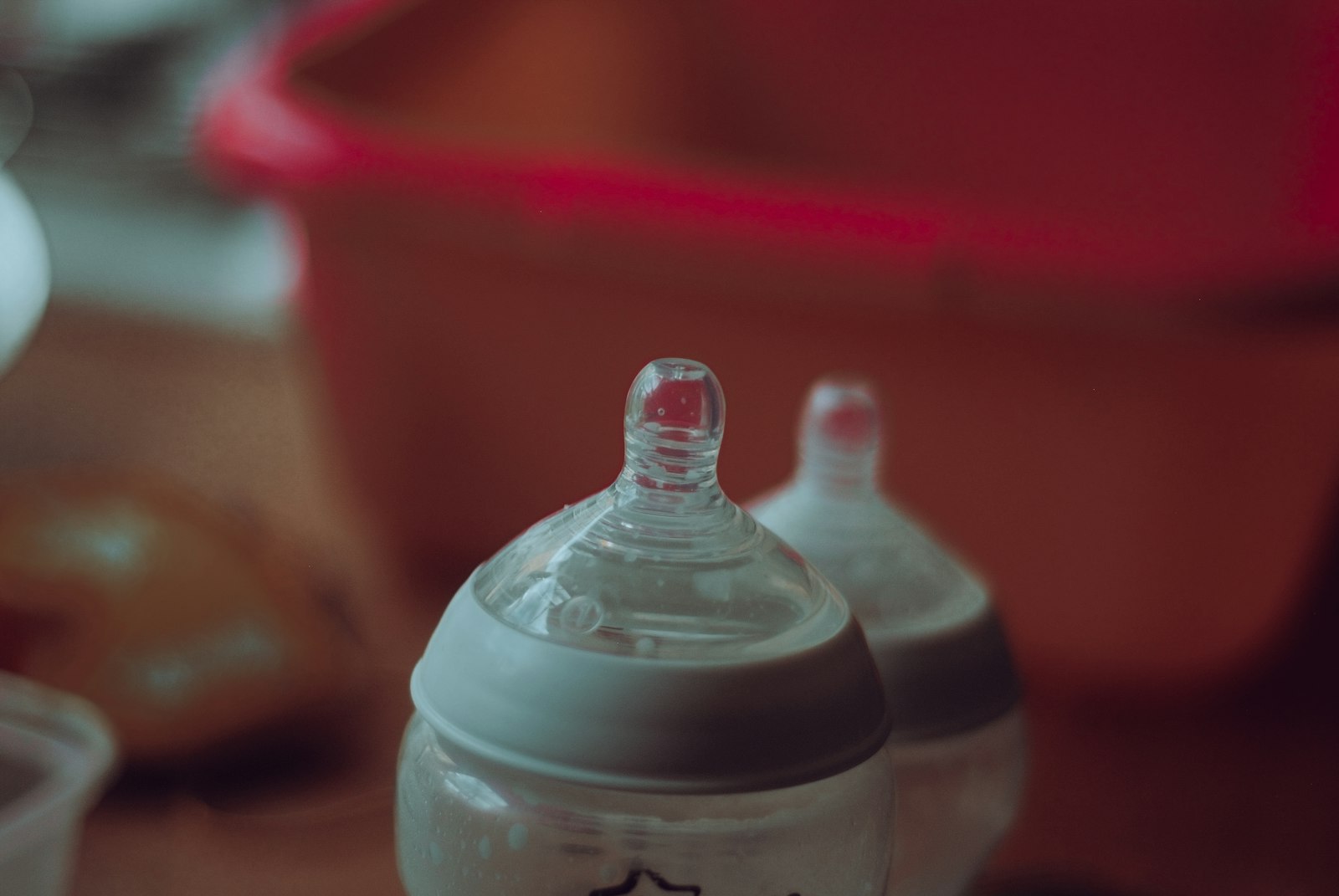
I’d start this decision by looking at where the dirty water will go. The Baby Brezza Bottle Washer Pro collects it in a removable tank. The Momcozy KleanPal Pro sends it through a drain hose. That difference can settle the purchase before either brand’s spray-jet count enters the conversation.
For an island or a counter without a convenient drain route, Baby Brezza would be my first consideration. Beside a sink with a sensible place for the hose, Momcozy becomes a strong option. I’d choose only after checking whether the bottles and pump parts I actually use fit the racks.
Both machines can automate part of a repetitive chore. You’ll still empty bottles, separate parts, load them correctly, add detergent, and maintain the machine. Whether that trade is worth the counter space depends on how much washing your household does each day.
The useful side-by-side
| Baby Brezza Bottle Washer Pro | Momcozy KleanPal Pro | |
|---|---|---|
| Dirty-water handling | Removable dirty-water tank | Drain hose leading to a sink or suitable container |
| Clean-water supply | Refillable tank | Refillable tank |
| Advertised bottle capacity | Up to four bottles with compatible parts | Up to four bottles with small parts |
| Short wash option | 19-minute wash and rinse | 19-minute rapid wash |
| Longer sequence | About 90 minutes for wash, sterilize, and dry | 79 minutes for rapid wash, sterilize, and dry; 89 minutes using normal wash |
| Main ownership question | Will you regularly empty and clean the waste tank? | Can you route the hose properly where the machine will live? |
Specifications were checked in October 2026. Cycle names matter: a short wash and a complete wash-and-dry sequence are different things. Follow the current manual for the selected mode and load.
These scores are desk-researched editorial assessments of setup, workflow, and value. We haven’t tested cleaning performance side by side or verified the brands’ sterilization claims in a laboratory. The scores aren’t safety ratings.
Baby Brezza Bottle Washer Pro: 8/10 for flexible placement
The Baby Brezza Bottle Washer Pro is the one I’d investigate first when a drain hose would be awkward. Its clean- and dirty-water tanks keep the water handling within the appliance until you carry the tanks to the sink.
That earns it an 8/10 for a household that wants a self-contained arrangement and accepts the repeated filling and emptying. The waste tank is also the tradeoff: you’re responsible for dealing with its contents after use.
Pros
- A separate dirty-water tank avoids the need to route a drain hose across the counter.
- Its stated capacity of up to four bottles can suit a small regular load.
- Separate modes let you select the operations you need, subject to the manual and compatible parts.
Cons
- The tank must be emptied and cleaned; collected wastewater doesn’t disappear by itself.
- Four-bottle capacity may be too small for a large end-of-day pile.
- It requires the specified Baby Brezza detergent tablets, adding an ongoing purchase.
At our check, the US page listed a regular price of $299.99 and a promotional price of $233.99. Treat the promotion as a dated snapshot, not a promise about what you’ll pay. Compare the checkout total for the exact model and included accessories.
I wouldn’t pay extra for placement flexibility if the machine were going to sit beside the sink anyway and the hose option worked there. I’d pay for it when it solved an actual kitchen problem.
Momcozy KleanPal Pro: 8/10 for a practical drain setup
The Momcozy KleanPal Pro makes more sense when there’s a clear route for its drain hose. Its installation guidance allows the outlet to go into a sink or a suitable drain container. The clean-water tank still needs filling.
It earns an 8/10 for that arrangement and its choice of wash sequences. The score assumes you’ve checked the hose setup before buying. A machine that leaves tubing stretched across your only food-preparation area would be a poor fit for that kitchen.
Pros
- With the hose correctly routed to a sink, there’s no separate internal wastewater tank to carry over and empty.
- Rapid and normal wash options let you choose between the stated cycle sequences.
- The racks accommodate bottles and compatible small parts, with capacity depending on the load.
Cons
- The hose needs an appropriate destination and placement that follows the installation instructions.
- A separate collection container brings back an emptying task and takes additional space.
- Mixed bottle and pump-part loads can reduce the number of bottles you can fit.
I’d check the current price directly for the KleanPal Pro rather than compare a temporary coupon with another brand’s regular price. Also check that the listing is for this washer. A sterilizer or dryer without a washing function is a different purchase.
Measure more than the machine’s footprint
Clear a space where you think the washer will live, then act out a complete load. You’ll need room to open it, lift out racks or tanks as instructed, and put the dismantled bottle parts down somewhere.
Look at the wall cabinets above the counter. Look at the outlet. Look at where the cord will go and how close everything is to water. Use the manufacturer’s clearance and electrical instructions for the final arrangement; a rough tape outline can’t establish safe placement.
With Momcozy, include the drain route in this exercise. A hose that technically reaches the sink may still obstruct a drawer or run through the spot where you prepare food. With Baby Brezza, check that removing and replacing the tanks feels feasible in the intended location.
I’d also leave somewhere clean for unloading. Buying an appliance to free the drying rack loses some appeal if finished parts have nowhere to go. A drawer or covered storage arrangement can be part of the plan, provided the parts are fully dry first.
Count the parts in your actual load
“Four bottles” is a starting point. Your feeding setup may include collars, nipples, caps, vent components, collection containers, and pump parts of different shapes. A rack photograph showing one brand’s simple bottles doesn’t prove your whole pile will fit.
Make a list of the exact bottle and pump models you use. Check compatibility for each part with both the appliance and the part manufacturer’s cleaning instructions. Some components have their own heat restrictions or other requirements.
For pump parts, be particularly careful about the difference between a general claim of compatibility and approval for your exact wearable collection cup, valve, or membrane. Some arrangements need a particular rack. Don’t force a delicate component into a position because it appears to fit.
Correct loading also matters. Parts need the orientation and spacing specified in the manual. I’d prefer a slightly smaller correct load to an overfilled rack that stops water reaching where it’s supposed to go.
For a family using only a couple of bottles a day, a four-bottle machine may be ample. A household combining frequent bottle-feeding and pumping may need several loads. Count those loads before imagining that the day’s entire cleanup will happen with one button press.
The 19-minute headline can hide a longer wait
Both products advertise a short wash option. That doesn’t mean a complete load will be washed, treated with steam, dried, cooled as needed, and ready to reassemble in 19 minutes.
The table above separates the short wash from the longer sequence. Use the longer figure when planning how many clean bottles you’ll need while a full cycle runs. Build in time for unloading and whatever handling instructions the machine requires afterward.
If your feeding routine regularly leaves you with one usable bottle and a full dirty rack, the appliance won’t fix the timing by itself. A modest reserve of compatible bottles may matter more than a few minutes between advertised cycles.
I also wouldn’t use the number of spray jets to choose a winner. More jets are an engineering detail, but they don’t establish superior cleaning without a meaningful comparison. Load design, the wash program, and correct use all matter. We don’t have independent test results here that justify declaring one machine the cleaning champion.
Add detergent and maintenance to the price
Both machines use specified detergent tablets, and their advertised packages included a starter supply at our check. A starter pack eventually runs out. Find the refill that your exact machine requires and calculate its cost per wash.
For illustration, a hypothetical tablet costing 20 cents would cost $12 a month at two loads a day, using a 30-day month. At three daily loads, it would be $18. Those are arithmetic examples, not verified refill prices for either brand, and they exclude water, electricity, and maintenance supplies.
The washer also needs its own cleaning. Read the maintenance and descaling instructions before buying, particularly if dealing with another water-using appliance already irritates you. Check how the filter, tanks, and accessible surfaces are maintained.
I’d assign that job to someone explicitly. A shared appliance can become mysteriously nobody’s responsibility until it needs attention at the worst moment. Whoever unloads the last cycle can at least see whether the next user has water, detergent, and a machine ready to run.
Your existing dishwasher deserves consideration
Before spending on a dedicated washer, check whether your bottles and pump parts are dishwasher-safe and whether your current dishwasher can handle them according to their instructions. A suitable small-parts basket may make that arrangement practical.
The AAP’s pump-cleaning guidance says parts should be cleaned after each use. It also explains that using a dishwasher with hot water and a heated drying cycle or sanitizing setting removes the need for a separate sanitizing step for those dishwasher-cleaned items. Follow individual part instructions and any medical advice for your baby.
Premature or medically vulnerable babies may need additional precautions directed by their care team. An appliance’s marketing language shouldn’t decide that routine. Ask for advice specific to your child’s situation if there’s uncertainty.
A dedicated washer can still earn its space when the household dishwasher runs too infrequently or is usually full of cooking dishes. That is a concrete convenience argument. You can value the time saved without turning the purchase into a requirement for being a careful parent.
Which one I’d choose
I’d choose Baby Brezza if tank-based drainage made the machine easier to place and use in my kitchen. I’d choose Momcozy if the drain hose could stay correctly routed and the exact parts I needed fitted its racks well.
If both arrangements worked, I’d compare their current total prices, compatible loads, refill costs, and return terms. I wouldn’t pay a large difference for a cycle headline or an unverified claim of cleaner bottles.
And if the existing dishwasher already handled the job reliably, I’d keep the counter space. The right purchase depends on the chore you’re actually trying to remove and how much of it the machine will take over.